
This article is adapted from Think Mongol Institute's Policy Brief No. 8.
When Iran closed the Strait of Hormuz in March 2026, oil prices spiked and global markets were reminded of a basic vulnerability: countries that depend heavily on a single supply route can be affected by disruptions far beyond their own borders. For Mongolia, the lesson lands especially close to home.
Amid rising geopolitical and economic uncertainty, countries are placing greater emphasis on reducing critical dependencies on external actors. Indeed, self-sufficiency in strategic sectors is increasingly intertwined with economic security and strategic autonomy. Given this context, Mongolia's current reality leaves little room for complacency. The country is not only dependent on a single market for its exports, but is also placing a high-stakes bet on a single supplier, Russia, for critical economic inputs. Should Russian supplies be disrupted, or should China's borders close, Mongolia would face immediate and significant disruptions that would reverberate throughout the economy.
The good news is that, with its abundant natural resources, Mongolia has the potential to reduce many of these vulnerabilities. Realizing that potential, however, will require long-term, deliberate policy decisions. Moreover, these issues should not be evaluated solely from a commercial standpoint; strengthening domestic capacity is an investment in Mongolia's economic resilience and, in turn, its ability to maintain strategic autonomy in an increasingly uncertain world.
While fuel and food security tend to dominate the conversation around supply-chain vulnerability, three deeper risks deserve greater attention: grid constraints holding back economic growth, dependence on imported fertilizer, and reliance on imported mining explosives.
Risk 1: Grid Constraints Are Hindering Economic Growth
For decades, Mongolia's energy system has been built around a small number of centralized coal power plants serving major urban and industrial centers, alongside electricity imports from Russia and China that account for roughly a quarter of total supply. The problem is that many of the country's promising resource and industrial projects are located hundreds of kilometers from existing transmission infrastructure, a geographic mismatch that has created a persistent bottleneck to investment and economic growth.
Expanding the grid to serve these remote projects is both costly and time-consuming. In some cases, the cost of transmission infrastructure can approach or even exceed the cost of generation itself, and delays in grid expansion can undermine project viability by increasing financing risks and exposing investments to shifting commodity cycles and market conditions. As a result, Mongolia's underdeveloped grid, with its limited geographic coverage, is increasingly becoming a risk to economic growth.
The potential solution lies in Mongolia's abundant uranium, wind, and solar resources, which together enable a more flexible, distributed energy strategy. Rather than following the sequence of “build the grid first, then attract investment,” a more adaptive model of deploying energy infrastructure in response to where investment is already materializing may be better suited to Mongolia's vast geography, dispersed mineral deposits, growing AI and data-center opportunities, and abundant renewable resources.
In this context, renewables, well suited to modular deployment, can play an immediate and scalable role: the South Gobi's wind and solar resources offer both domestic supply and export potential to China. Over the longer term, Mongolia's uranium reserves could provide a pathway toward energy diversification. The Zuuvch-Ovoo uranium project, being developed through Mongolia's partnership with France's Orano, lays the groundwork for the country's potential future development of nuclear energy. Small Modular Reactors (SMRs), in particular, could provide Mongolia with a reliable energy source capable of supporting industrial clusters; experts highlight their scalability, shorter construction timelines, and affordability as well suited to Mongolia's geography and energy needs. Taken together, integrating advanced nuclear technologies such as SMRs with wind and solar development could help unlock investment by bringing reliable energy closer to emerging mining, industrial, and data-center projects, reducing dependence on costly grid expansion.
Risk 2: No Fertilizer, No Harvest
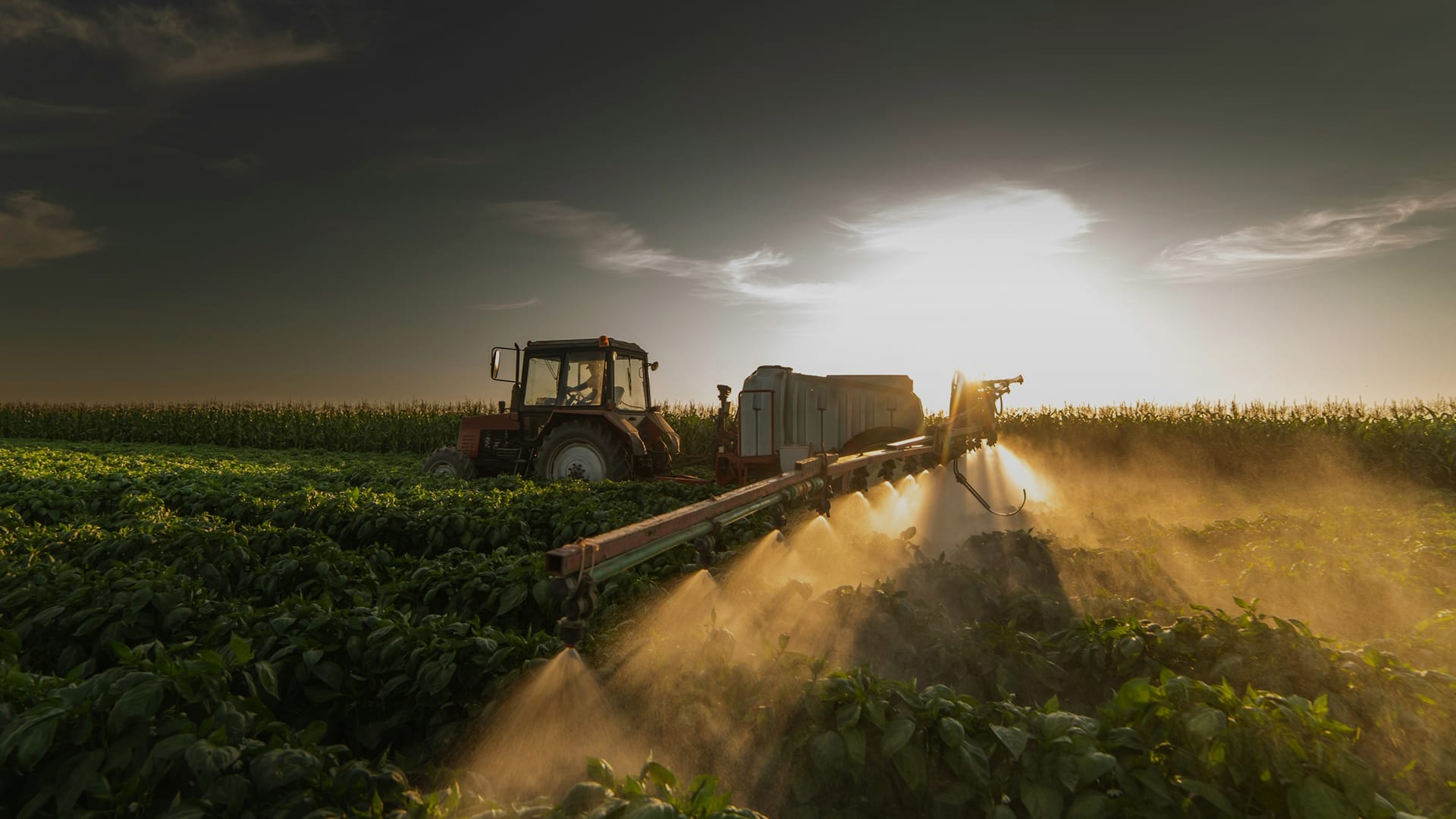
Mongolia imports around half of its food, and the crops it does grow domestically are limited by fertilizer availability. As of 2025, Mongolia consumed more than 200,000 tonnes of fertilizer per year on average, of which about 95% was imported. The majority of imported fertilizer consists of chemical fertilizers, particularly nitrogen-based fertilizers. Because nitrogen fertilizers can only be produced by reforming natural gas or gasifying coal, and Mongolia currently lacks the capacity to manufacture them domestically, the country depends entirely on imports, overwhelmingly from Russia, which accounted for 99% of Mongolia's nitrogen fertilizer imports in 2025, a share that has risen steadily over the past decade.
Mongolia, however, has the resources to develop a domestic fertilizer industry. With around 60% of Mongolia's farmland suffering from severe degradation, domestic fertilizer production could help increase agricultural productivity while reducing food-import dependence.
The country possesses potassium deposits associated with dried lake basins in the Gobi region, along with substantial phosphorus reserves, providing key inputs for potash and phosphate fertilizer production. For nitrogen fertilizer, the planned Tavantolgoi Industrial and Technology Park offers a feasible pathway: its coal-chemical plant is designed to process 2.7 million tonnes of washed coal into 100,000 tonnes of ammonia, which can then be converted into urea, the world's most widely used nitrogen fertilizer. A precedent already exists in China, where reliance on coal-based urea production has strengthened fertilizer security and reduced exposure to natural gas price volatility and external supply disruptions: around 78% of China's urea output is produced from coal, allowing it to remain largely self-sufficient despite recent turmoil in global fertilizer markets.
A third option is renewable electricity used to produce hydrogen via electrolysis, which can then be combined with nitrogen from the air to make “green ammonia,” the core input for nitrogen fertilizers. China recently commissioned the world's largest green hydrogen-ammonia project in neighboring Inner Mongolia, demonstrating the feasibility of this model.
Risk 3: The Mining Explosives Constraint
Mongolia's mining sector, the backbone of its economy, is entirely dependent on imports for an input that is physically non-negotiable for its operations. Mongolian companies holding import licenses bring in approximately 200,000 tonnes of explosive raw materials annually, sourced predominantly from Russia and China. In particular, Mongolia is heavily reliant on Russian ammonium nitrate, the key input in the production of mining explosives.
The vulnerability of this dependence has already been demonstrated. Russia recently suspended ammonium nitrate exports for a month to prioritize domestic agricultural needs amid global supply concerns. Although Mongolia was not affected this time, this episode illustrates that export access is ultimately contingent on Russian domestic conditions, and that a disruption could materialize with little warning. Despite its overwhelming importance to the mining sector, Mongolia currently holds no domestic ammonium nitrate production capacity.
A potential solution mirrors the pathway identified for fertilizer: a coal-chemical complex such as the Baganuur Industrial Technological Park could produce ammonia from coal, a key precursor to ammonium nitrate and, ultimately, to mining explosives.
Managing What Mongolia Can Control
Some supply-chain risks lie beyond Mongolia's control, including global commodity cycles, domestic conditions in neighboring countries, and geopolitical tensions. Others are controllable, determined by domestic choices in production, regulation, and infrastructure planning, among others. The three risks mapped above are a starting point, not the full picture.
Two things are within Mongolia's power. First, map every controllable risk, sector by sector: each ministry and industry should audit its critical inputs, supply concentration, and substitution capacity. Second, build a strategic reduction plan for each identified risk, with roadmaps outlining the legal steps, financing, and timelines needed to reduce exposure.
Converting Mongolia's potential into reality will require sustained political and legal backing, paired with the policy support needed to follow through:
- Mongolia has already shown that legislative speed is possible when the political will exists
In November 2024, Parliament approved amendments to the Law on Nuclear Energy, establishing the legal framework for the Zuuvch-Ovoo investment agreement with Orano. A similar level of political commitment now needs to extend to SMR deployment, to the coal-chemical complexes that could reduce fertilizer and explosives dependencies, and to the broader set of controllable risks.
- Strong policy support will be essential
Renewables illustrate the point: the resource potential is well established, but land allocation, multi-stage permitting, tariff approval, and PPA negotiation remain persistent bottlenecks requiring robust policy action. Moreover, given the state's limited fiscal capacity, strengthening the investment climate, expanding public-private partnerships, and exploring alternative financing mechanisms will all be essential to addressing these risks and, ultimately, to turning Mongolia's resource endowments into genuine supply-chain resilience and strategic autonomy.
Related Publications