
Introduction: The Core Institutional Tension
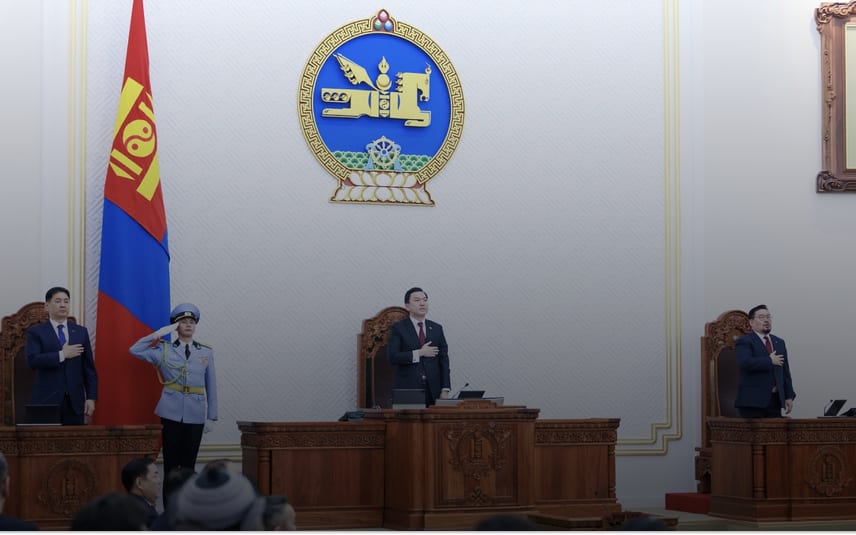
The proposed amendment to the Law on the State Great Khural, initiated under President U.Khurelsukh, has reopened a long-standing debate about the nature of accountability within Mongolia’s parliamentary system. While the reform is officially framed as a measure to strengthen discipline, transparency, and ethical standards among the Members of Parliament (MP), it has also generated concern among opposition parties and civil society about its broader institutional implications. At the center of the debate lies a fundamental question: How to ensure meaningful accountability without shifting the balance of authority away from Parliament as an independent representative body?
Public dissatisfaction with parliamentary performance, concerns about inefficiency, and repeated allegations of misconduct have created pressure for institutional change. High-profile cases have reinforced these concerns. For example, investigations into sitting MPs, such as the case involving D.Amarbayasgalan over alleged abuse of power and illicit enrichment highlight the continued exposure of senior political figures to corruption-related scrutiny.
At the same time, recent developments suggest that legal and disciplinary mechanisms are not always applied consistently. For example, during the October 2025 political crisis, several lawmakers who participated in parliamentary efforts to dismiss Prime Minister G.Zandanshatar’s Cabinet, following a contested vote of no confidence and subsequent constitutional dispute, later faced criminal investigations and charges, including allegations related to abuse of authority and attempts to undermine state institutions. These developments led the MPs involved to argue that the legal actions were politically motivated, raising concerns about selective enforcement.
Strengthening accountability mechanisms can therefore be seen as a response to both ongoing misconduct and concerns about uneven enforcement, as well as an effort to better align parliamentary practice with constitutional principles.
2. Enforcing Discipline or Silencing Dissent?
One of the most consequential changes in the draft concerns the introduction of a 70 percent attendance requirement for MPs. On the surface, this provision appears to address a widely acknowledged weakness in parliamentary practice: low attendance and limited engagement in plenary sessions. However, in institutional terms, the measure raises questions about how legislative behavior is regulated and who defines legitimate parliamentary participation.
In a system where absenteeism has sometimes functioned as a form of political protest or minority signalling, strict numerical thresholds risk narrowing the space for procedural dissent. While the intention is to improve discipline, the effect may be to convert parliamentary participation into a formal compliance metric, reducing flexibility in how representatives express disagreement within formal institutions.
Over time, this may limit the use of non-attendance as a procedural strategy within Parliament, particularly for minority groups seeking to signal dissent or influence legislative timing. Rather than eliminating such practices, the requirement could shift how opposition is expressed, making it more difficult to rely on informal or indirect methods of contestation. In this sense, the provision does not simply strengthen participation, but also reshapes the range of tools available to MPs within the legislative process.
3. Legal Ambiguity and the Issue of Ethical Accountability
A second area of concern lies in the draft’s reference to “serious ethical violations” as grounds for recall. Although the inclusion of ethical accountability is not inherently controversial, the lack of precise legal definition creates legal ambiguity. In practice, such open-ended language may shift the determination of misconduct from a legal standard to a politically mediated process.
In a majoritarian environment, this ambiguity becomes especially consequential. Parliamentary committees or party leadership structures responsible for interpreting “ethical violations” may use this provision selectively, particularly in moments of internal dissent. For example, an MP who publicly breaks from the party line on a high-stakes policy issue—such as budget allocation or a confidence vote—could be accused of an “ethical breach” not for unlawful conduct, but for undermining party cohesion. In such cases, the recall mechanism risks functioning less as a safeguard of integrity and more as a tool to discipline or pressure MPs into compliance, thereby narrowing the space for independent legislative behavior.
4. From Voters to Parties: Who Controls List MPs?
The proposed recall mechanism for MPs elected through proportional representation adds another layer to the institutional balance. By allowing parties to recall list-based MPs, the draft gives them greater control over whether those MPs remain in Parliament. This approach reinforces discipline within party ranks, where representatives are expected to stay aligned with party platforms.
At the same time, it reshapes the link between MPs and voters. Unlike constituency MPs, who remain directly accountable to their districts, list MPs may depend more on party leadership for their political survival. This creates an informal gap in how secure different mandates are. Over time, this could make MPs more cautious about breaking from party positions, narrowing space for open debate and reducing the range of views expressed in Parliament.
5. Contested Reform: Competing Views on Accountability
These provisions, particularly the party-controlled recall mechanism for list-based MPs, help explain the mixed reactions to the reform. Supporters see them as a corrective to long-standing weaknesses in parliamentary accountability, where ethical breaches and procedural violations have often carried limited consequences. From this perspective, strengthening party enforcement could be an institutionally efficient way to restore discipline, improve compliance with standards, and rebuild public trust in Parliament’s ability to regulate itself.
Opposition parties and civil society actors, however, argue that the same mechanisms risk shifting accountability away from institutional rules and toward party discretion. Without clear legal safeguards and independent oversight, recall powers could become tools of internal party control rather than neutral enforcement of standards, blurring the line between accountability and political management. The result is a deeper structural trade-off: the reform may improve discipline, but it does so by concentrating authority within party structures, potentially at the expense of parliamentary autonomy and the independence of individual mandates.
6. Conclusion: Where Power Shifts Next
The proposed amendments mark a notable shift in Mongolia’s political system, reinforcing accountability and discipline while expanding party influence over MPs. While this may enhance institutional integrity under clear rules and independent oversight, it also carries a structural risk of weakening parliamentary autonomy by concentrating influence within party leadership and oversight bodies.
Ultimately, the reform is less about technical accountability mechanisms than about how political authority is redistributed in practice, especially during moments of intra-party conflict or parliamentary dissent. It may either strengthen governance or increase the power of dominant political actors at the expense of legislative independence.
What happens next is still unclear. Opposition and smaller parties have little incentive to support it, which makes broad agreement difficult. If resistance continues, the President might choose to revise or even withdraw the proposal rather than push it through and risk political fallout.
Related Publications